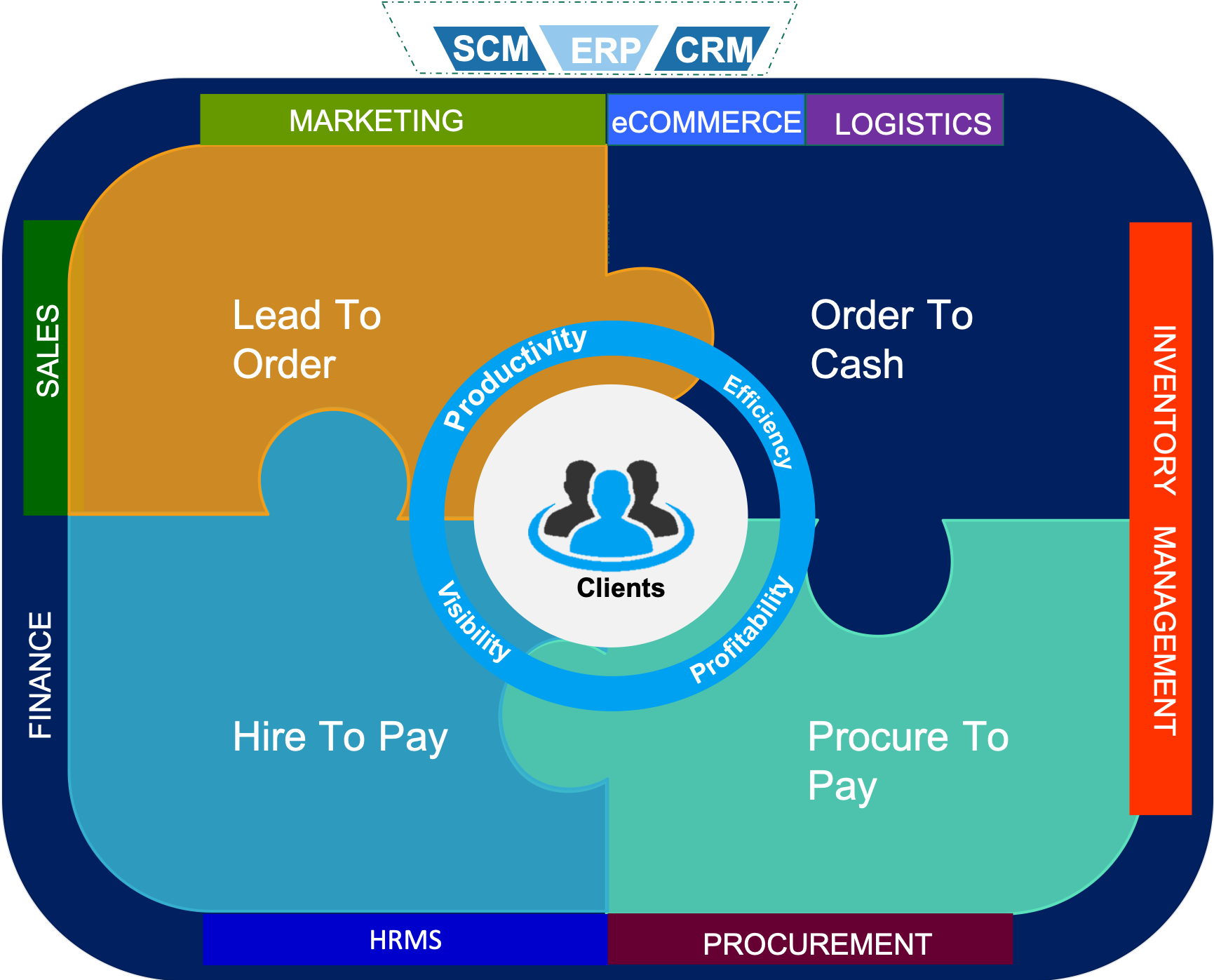
Unlocking Synergy: The Power of CRM and ERP Integration
In today’s hyper-competitive business landscape, organizations are constantly seeking ways to optimize operations, enhance customer experiences, and drive revenue growth. Two essential systems at the heart of these efforts are Customer Relationship Management (CRM) and Enterprise Resource Planning (ERP). While each serves distinct functions, their true potential is unleashed when seamlessly integrated. This article delves into the transformative power of CRM and ERP integration, exploring its benefits, challenges, and best practices for successful implementation.
Understanding CRM and ERP: A Brief Overview
Before delving into integration, it’s crucial to understand the core roles of CRM and ERP systems:
-
Customer Relationship Management (CRM): CRM is a software solution that focuses on managing and nurturing customer interactions throughout the entire customer lifecycle. It helps businesses track leads, manage contacts, personalize marketing campaigns, provide excellent customer service, and analyze customer data to improve overall relationships. Key features include contact management, sales automation, marketing automation, customer service tools, and reporting.
-
Enterprise Resource Planning (ERP): ERP is a comprehensive suite of software modules that integrates various business functions, such as finance, human resources, supply chain management, manufacturing, and inventory management. It provides a centralized platform for managing resources, streamlining processes, and gaining real-time visibility into the entire organization.
The Case for Integration: Why Connect CRM and ERP?
While both CRM and ERP are valuable on their own, integration creates a powerful synergy that unlocks significant benefits:
-
Enhanced Customer Experience: Integration provides a 360-degree view of the customer. Sales, marketing, and customer service teams gain access to real-time information on order history, shipping status, product availability, pricing, and payment information directly within the CRM system. This enables them to provide personalized and informed interactions, leading to higher customer satisfaction and loyalty.
-
Improved Sales Efficiency: By integrating CRM with ERP, sales teams can access real-time inventory data, pricing information, and order status directly within their CRM system. This eliminates the need to switch between systems, reduces errors, and enables them to close deals faster. Sales forecasts become more accurate as they are based on real-time data from both systems.
-
Streamlined Order Management: Integration automates the order management process, from order placement to fulfillment and invoicing. When a sales order is created in CRM, it is automatically transferred to ERP for processing. This eliminates manual data entry, reduces errors, and accelerates order fulfillment.
-
Optimized Inventory Management: ERP provides real-time inventory data, which can be shared with the CRM system. This enables sales teams to accurately inform customers about product availability and delivery timelines. It also helps optimize inventory levels, reducing stockouts and minimizing carrying costs.
-
Data-Driven Decision Making: Integration provides a unified view of business data, enabling organizations to gain deeper insights into customer behavior, sales trends, and operational performance. This data can be used to make more informed decisions about product development, marketing campaigns, and sales strategies.
-
Improved Collaboration: Integration fosters better collaboration between sales, marketing, customer service, and operations teams. All teams have access to the same information, ensuring that everyone is on the same page and working towards the same goals.
-
Increased Revenue: By improving customer experience, sales efficiency, and operational efficiency, CRM and ERP integration can lead to increased revenue. Sales teams can close more deals, customer retention rates increase, and operational costs are reduced.
Challenges of CRM and ERP Integration
While the benefits of integration are clear, it’s important to acknowledge the potential challenges:
-
Complexity: Integrating two complex systems like CRM and ERP can be a complex undertaking. It requires careful planning, technical expertise, and a thorough understanding of both systems.
-
Data Mapping and Migration: Ensuring that data is accurately mapped and migrated between systems is crucial for successful integration. This can be a time-consuming and challenging process, especially if the data structures in the two systems are different.
-
Customization: If either the CRM or ERP system is heavily customized, integration can be more complex. Customizations may need to be modified or re-engineered to ensure compatibility.
-
Cost: Integration can be a significant investment, especially if it requires custom development or the purchase of additional software.
-
Resistance to Change: Integrating CRM and ERP can require significant changes to business processes, which can be met with resistance from employees.
Best Practices for Successful CRM and ERP Integration
To overcome the challenges and maximize the benefits of CRM and ERP integration, consider these best practices:
-
Define Clear Objectives: Before starting the integration process, clearly define the objectives you want to achieve. What specific business problems are you trying to solve? What metrics will you use to measure success?
-
Choose the Right Integration Approach: There are several approaches to CRM and ERP integration, including:
- Native Integration: Some CRM and ERP vendors offer native integration capabilities, which are built-in connectors that simplify the integration process.
- Third-Party Integration: There are also third-party integration platforms that provide pre-built connectors for integrating various CRM and ERP systems.
- Custom Integration: In some cases, custom integration may be necessary to meet specific business requirements.
-
Data Cleansing and Standardization: Before migrating data between systems, cleanse and standardize the data to ensure accuracy and consistency.
-
Thorough Testing: Thoroughly test the integrated system to ensure that all data is flowing correctly and that all processes are working as expected.
-
User Training: Provide comprehensive training to users on how to use the integrated system. This will help them understand the new processes and take full advantage of the new capabilities.
-
Ongoing Maintenance and Support: Integration is not a one-time project. It requires ongoing maintenance and support to ensure that the integrated system continues to function properly.
-
Start Small and Scale: Consider starting with a phased approach to integration, focusing on the most critical areas first. As you gain experience and confidence, you can gradually expand the integration to other areas.
The Future of CRM and ERP Integration
The future of CRM and ERP integration is likely to be driven by several trends, including:
- Cloud-Based Integration: Cloud-based integration platforms are becoming increasingly popular, as they offer greater flexibility, scalability, and cost-effectiveness.
- Artificial Intelligence (AI): AI is being used to automate various aspects of CRM and ERP integration, such as data mapping and data cleansing.
- Low-Code/No-Code Platforms: Low-code/no-code platforms are making it easier for businesses to integrate CRM and ERP systems without requiring extensive coding skills.
Conclusion
CRM and ERP integration is a powerful strategy for organizations looking to improve customer experience, streamline operations, and drive revenue growth. By carefully planning the integration process, choosing the right approach, and following best practices, businesses can unlock the full potential of these two essential systems and gain a competitive edge in today’s market. As technology continues to evolve, the future of CRM and ERP integration is bright, with new innovations and capabilities emerging all the time.