The Definitive Guide to Cloud CRM: Powering Business Growth in the Digital Age
In today’s rapidly evolving business landscape, Customer Relationship Management (CRM) systems have become indispensable tools for organizations seeking to build strong customer relationships, streamline operations, and drive sustainable growth. Among the various CRM deployment options available, cloud CRM has emerged as the dominant force, offering unparalleled flexibility, scalability, and cost-effectiveness.
This comprehensive guide delves into the world of cloud CRM, exploring its benefits, key features, implementation strategies, and best practices. Whether you’re a small business owner or a seasoned enterprise executive, this article will provide you with the knowledge and insights you need to harness the power of cloud CRM and transform your customer engagement.
What is Cloud CRM?
At its core, Cloud CRM (Customer Relationship Management) is a software delivery model where CRM applications and data are hosted on a remote server infrastructure managed by a third-party provider. Unlike traditional on-premise CRM systems that require businesses to install and maintain software on their own servers, cloud CRM allows users to access CRM functionalities over the internet using a web browser or mobile app.
Key Benefits of Cloud CRM
The popularity of cloud CRM stems from its numerous advantages over traditional CRM solutions:
- Cost-Effectiveness: Cloud CRM eliminates the need for upfront investments in hardware, software licenses, and IT infrastructure. Instead, businesses typically pay a subscription fee based on the number of users or the features required. This pay-as-you-go model makes cloud CRM an attractive option for businesses of all sizes, especially startups and small businesses with limited budgets.
- Scalability and Flexibility: Cloud CRM solutions can easily scale up or down to accommodate changing business needs. As your business grows, you can seamlessly add more users or features without having to worry about hardware limitations or software upgrades. This scalability ensures that your CRM system can adapt to your evolving requirements.
- Accessibility and Mobility: With cloud CRM, users can access customer data and CRM functionalities from anywhere with an internet connection. This accessibility is particularly valuable for sales teams, field service representatives, and remote workers who need to stay connected to the business while on the go.
- Automatic Updates and Maintenance: Cloud CRM providers are responsible for managing software updates, security patches, and system maintenance. This relieves businesses of the burden of managing these tasks internally, freeing up IT resources to focus on other strategic initiatives.
- Integration Capabilities: Cloud CRM systems often integrate seamlessly with other cloud-based applications, such as marketing automation platforms, accounting software, and e-commerce platforms. This integration enables businesses to create a unified view of customer data and streamline workflows across different departments.
- Enhanced Collaboration: Cloud CRM facilitates collaboration among team members by providing a centralized platform for sharing customer information, tracking interactions, and managing tasks. This improved collaboration can lead to better customer service, faster sales cycles, and increased productivity.
- Improved Data Security: Cloud CRM providers invest heavily in security measures to protect customer data from unauthorized access, data breaches, and other security threats. These measures include data encryption, firewalls, intrusion detection systems, and regular security audits.
Key Features of Cloud CRM
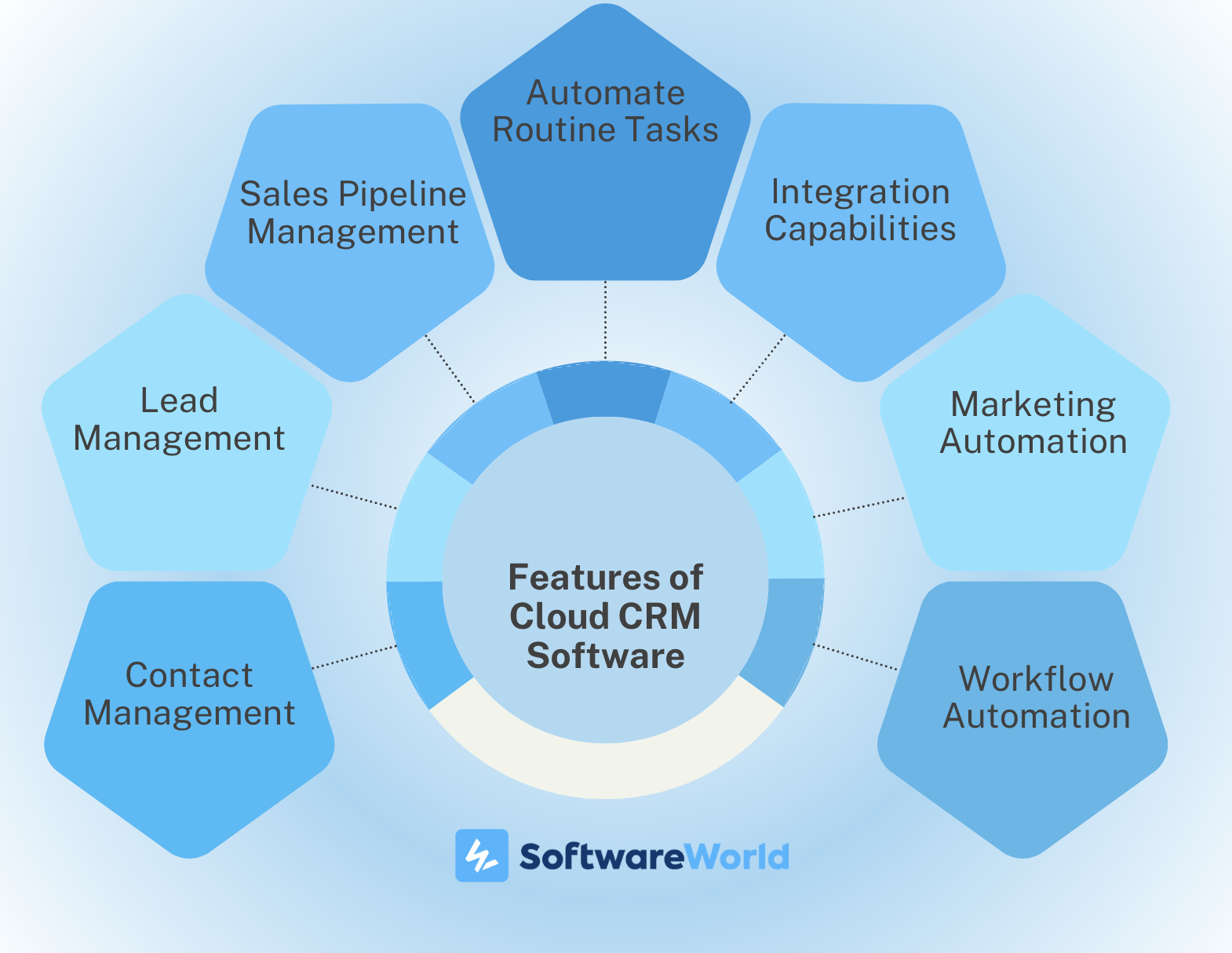
Cloud CRM systems typically offer a wide range of features to help businesses manage customer relationships effectively. Some of the most common features include:
- Contact Management: Centralize customer information, including contact details, communication history, and social media profiles.
- Lead Management: Track leads from initial contact to conversion, and manage lead nurturing campaigns.
- Sales Force Automation: Automate sales processes, such as opportunity management, quote generation, and order processing.
- Marketing Automation: Automate marketing tasks, such as email marketing, social media marketing, and lead scoring.
- Customer Service Management: Manage customer inquiries, resolve issues, and track customer satisfaction.
- Reporting and Analytics: Generate reports and dashboards to track key performance indicators (KPIs) and gain insights into customer behavior.
- Mobile Access: Access CRM data and functionalities from mobile devices, such as smartphones and tablets.
- Integration with Other Systems: Integrate with other business applications, such as accounting software, e-commerce platforms, and marketing automation tools.
Implementing Cloud CRM: A Step-by-Step Guide
Implementing a cloud CRM system can be a complex process, but by following a structured approach, businesses can increase their chances of success. Here’s a step-by-step guide to implementing cloud CRM:
- Define Your Goals and Objectives: Clearly define what you want to achieve with cloud CRM. Do you want to improve customer satisfaction, increase sales, or streamline operations?
- Assess Your Needs: Identify your business requirements and the specific features you need from a CRM system.
- Research and Evaluate CRM Providers: Research different cloud CRM providers and compare their features, pricing, and customer reviews.
- Choose a CRM Solution: Select a CRM solution that meets your needs and budget.
- Plan Your Implementation: Develop a detailed implementation plan, including timelines, milestones, and resource allocation.
- Data Migration: Migrate your existing customer data from your old system to the new CRM system.
- Customize Your CRM: Customize the CRM system to fit your specific business processes and workflows.
- Train Your Users: Provide comprehensive training to your users on how to use the CRM system effectively.
- Go Live: Launch your new CRM system and start using it to manage your customer relationships.
- Monitor and Optimize: Continuously monitor the performance of your CRM system and make adjustments as needed to optimize its effectiveness.
Best Practices for Cloud CRM
To maximize the benefits of cloud CRM, businesses should follow these best practices:
- Data Security and Privacy: Implement robust security measures to protect customer data from unauthorized access and data breaches.
- Data Quality: Ensure that your customer data is accurate, complete, and up-to-date.
- User Adoption: Encourage user adoption by providing adequate training and support.
- Integration: Integrate your CRM system with other business applications to create a unified view of customer data.
- Automation: Automate repetitive tasks to improve efficiency and reduce errors.
- Analytics: Use CRM analytics to track key performance indicators (KPIs) and gain insights into customer behavior.
- Mobile Optimization: Ensure that your CRM system is optimized for mobile devices to enable users to access customer data from anywhere.
- Regular Updates: Keep your CRM system up-to-date with the latest features and security patches.
The Future of Cloud CRM
The future of cloud CRM is bright, with continued innovation and advancements on the horizon. Some of the key trends shaping the future of cloud CRM include:
- Artificial Intelligence (AI): AI-powered CRM systems can automate tasks, personalize customer interactions, and provide valuable insights into customer behavior.
- Machine Learning (ML): ML algorithms can analyze customer data to predict customer churn, identify upsell opportunities, and improve customer service.
- Internet of Things (IoT): IoT devices can provide real-time data about customer behavior and preferences, enabling businesses to deliver more personalized experiences.
- Blockchain: Blockchain technology can be used to enhance data security and transparency in CRM systems.
- Low-Code/No-Code Platforms: Low-code/no-code platforms enable businesses to customize and extend their CRM systems without requiring extensive coding skills.
Conclusion
Cloud CRM has revolutionized the way businesses manage customer relationships, offering unparalleled flexibility, scalability, and cost-effectiveness. By understanding the benefits, features, and implementation strategies of cloud CRM, businesses can harness its power to drive growth, improve customer satisfaction, and gain a competitive edge in the digital age. As technology continues to evolve, cloud CRM will play an increasingly important role in helping businesses thrive in the ever-changing business landscape.